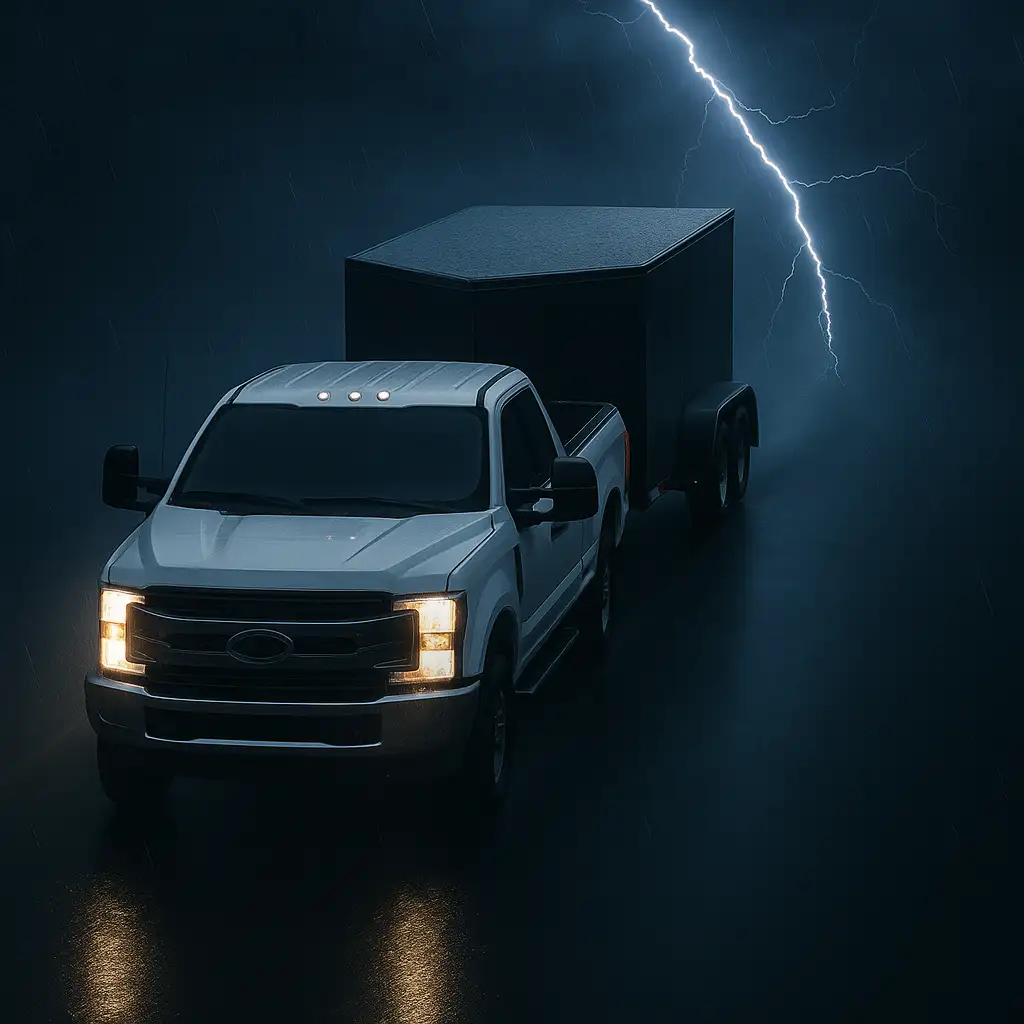
24/7 Emergency Service
Emergency Fuel Delivery in South Carolina
Generators run out at 3 a.m., not at a convenient hour. We answer the phone around the clock and deliver diesel to whatever has stopped — or is about to.
Standby generators during an outage, equipment dead on a live site, storm-response gear that has to deploy full. Across the Midlands of South Carolina, out of our Lexington yard.
Running out right now?
We answer 24/7 — nights, weekends and holidays.
When to call us
A generator is running down
Standby power is only as long as the tank. If the outage is outlasting your fuel, that's the call — and the earlier you make it, the better the odds we beat the tank to empty.
Equipment stopped mid-job
A machine out of fuel on a live site stops more than itself. We'll get you running rather than leaving a crew standing.
Storm response staging
Line trucks, pumps and portable generators staged ahead of weather need to be full before they deploy, not after.
A failed load test
If a test drained more than expected, or found the tank lower than the gauge claimed, we'll top it back up before it matters.
How long will your generator actually run?
Worth working out before storm season, because the answer is usually shorter than people assume.
- A rough rule for diesel gensets: about 0.05 to 0.07 gallons per hour for each kW, at full load. A 100 kW unit flat out burns somewhere near 7 gallons an hour.
- At half load that drops to roughly 4 gallons an hour for the same 100 kW unit — so what your actual load is matters as much as the nameplate.
- That puts a 500-gallon base tank somewhere around 70 hours at full load on a 100 kW set, and well over 100 at lighter load. Useful for planning; not a substitute for checking the gauge.
- Hurricane and ice-storm outages in the Midlands routinely run past 24 hours, which is how a tank sized for a short blip becomes a problem on day two.
- The practical lesson: work out your run time before the season, not during the outage. If it's under about 48 hours at realistic load, plan a refill rather than hoping.
These are planning rules of thumb, not a spec. Your actual burn depends on the unit, its load and its condition — check your generator's documentation for real numbers.
Have this ready when you call
It gets us moving faster and gets you a more accurate time.
- Where the site is, and how to get in after hours — gate codes, which entrance, who's on site.
- What fuel and roughly how much. Clear or dyed diesel, and the tank size if you know it.
- Where the fill point is and whether the truck can reach it.
- A phone number for someone who's actually there, not a desk that's closed.
- Whether anything is already down, so we can prioritise correctly against other calls.
Emergency fuel delivery questions
Yes. Emergency fuel delivery is a round-the-clock service — nights, weekends and holidays. Call (803) 303-2641 any hour and you'll get a straight answer about how soon we can be there.
It depends on where you are and what else is running, and we'd rather tell you a real time than a flattering one. We run out of Lexington, so most of the Midlands is a short run — Columbia roughly 20 minutes, West Columbia and Cayce around 15. During a widespread outage, demand spikes and we work a priority list.
In many cases yes, depending on the installation and the fill arrangement. Tell us the setup when you call and we'll come prepared. The alternative — letting it run dry and restarting — is worse for the equipment and worse for whatever it's powering.
We work a priority list, and customers on a standing schedule come first. That's not a sales line — it's the only workable way to allocate trucks when demand spikes. If critical power matters to your operation, getting on a schedule before the season is the single best thing you can do.
Yes. Facilities that have to pass load tests and ride out outages — medical, data, government, property management — are a core part of our generator work, both scheduled top-offs and emergency refills.
As a rough guide, a diesel genset burns about 0.05 to 0.07 gallons per hour per kW at full load, and roughly half that at half load. A 100 kW unit on a 500-gallon tank lands somewhere around 70 hours flat out. Work yours out before storm season, because Midlands outages regularly run past a day.
Yes, and before the forecast turns into a queue. Pre-storm top-offs are cheap insurance, and they're far easier to schedule than an emergency run with every road busy and every generator customer calling at once.
After-hours and emergency runs are priced differently from a scheduled delivery — that's honest. The way to avoid paying it is a standing schedule that keeps tanks full, which is also what puts you at the front of the queue when weather hits.
Other services
Ready to Get Started?
Contact us today for competitive pricing and same-day fuel delivery service
When you contact us, please include:
- Your location and delivery address
- Type and amount of fuel needed
- Preferred delivery date and time
- Equipment type (if applicable)