Diesel Fuel
Diesel Fuel Delivery in South Carolina
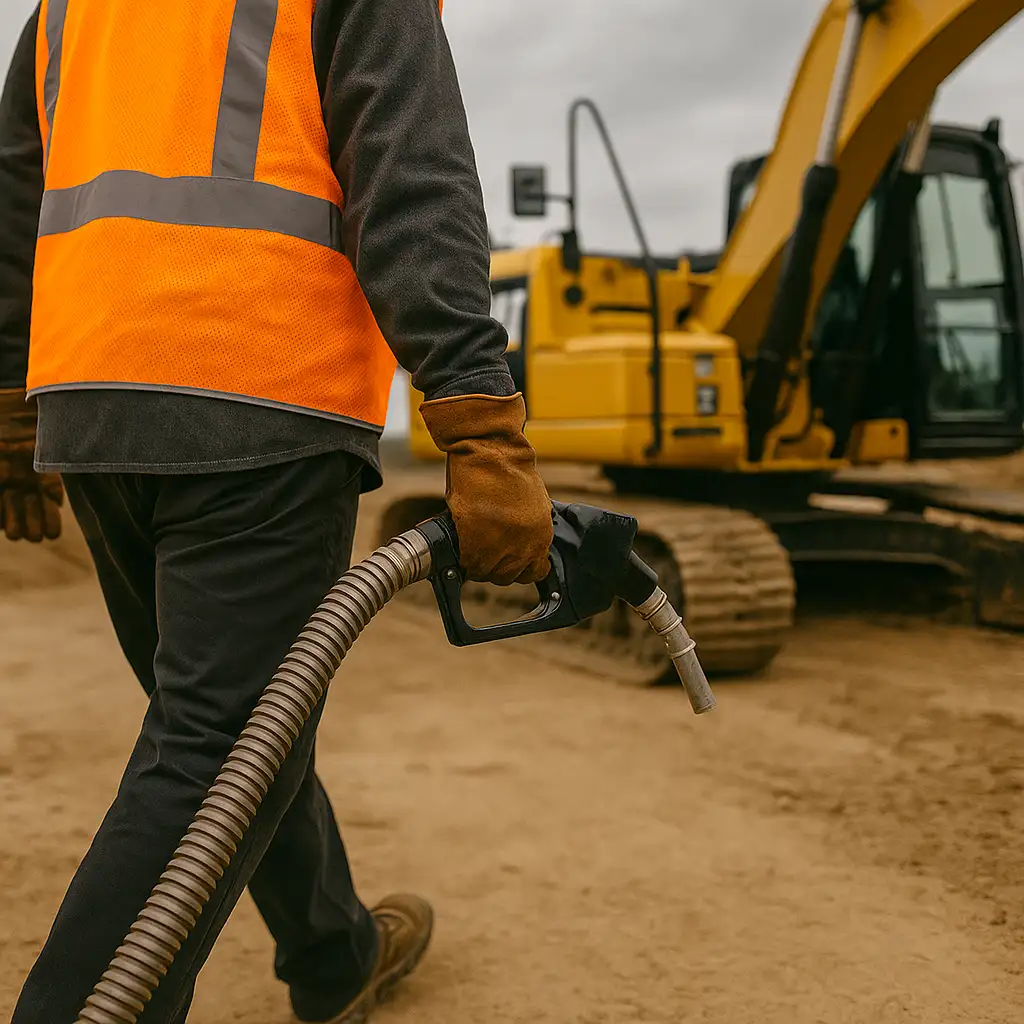
Diesel is the core of what we do. Clear on-road fuel for anything licensed for the highway, dyed off-road fuel for everything that isn't — delivered to the machine, the tank or the truck, across the Midlands of South Carolina.
No fuel runs, no cans in the back of a pickup, no crew standing around while someone drives to a pump and back.
Clear and dyed — and why it matters
Both are ultra-low sulfur diesel. The difference is tax status and where you're allowed to burn it.
Clear diesel (on-road)
Ultra-low sulfur diesel with federal and state road taxes included. This is what goes in anything licensed for the highway — tractors, dump trucks, box trucks, service vans and pickups.
Dyed diesel (off-road)
Chemically the same ultra-low sulfur diesel, dyed red and sold without road tax, for equipment that never operates on a public road: excavators, dozers, loaders, generators, pumps, farm and forestry equipment.
If you run licensed trucks and off-road equipment out of the same yard, we deliver both on the same visit, separated and labeled. The road-tax saving on the off-road side is real money across a fleet of machines, and it is the single most common thing operations leave on the table.
Where the fuel actually goes
We're set up to deliver into whatever you've got, not just one kind of receptacle.
- Equipment directly — we fuel each machine where it sits, on the job site or in the yard.
- Bulk storage tanks on your property, which is the cheapest way to buy once your volume supports it.
- Job-site tanks and skid tanks that move with the work.
- Generator base tanks and day tanks, on a schedule or during an outage.
- Fleet vehicles, wet-hosed in place overnight so drivers never detour to a pump.
Fuel quality, storage and cold snaps
Most diesel problems aren't the fuel — they're what happened to it after it was delivered.
- We keep clear and dyed diesel strictly separated and label every delivery. Dyed fuel in an on-road vehicle carries real federal and state penalties, and the dye is detectable long after the fact.
- Water is the main enemy of stored diesel. It settles under the fuel, feeds microbial growth and plugs filters. If you have bulk storage, check and drain the low point periodically.
- Diesel has a practical storage life of roughly 6 to 12 months before oxidation starts to matter. Tanks that turn over regularly rarely have a problem; tanks that sit half-full for a year do.
- South Carolina rarely gets cold enough for serious gelling, but hard cold snaps happen. Untreated #2 diesel starts clouding right around 10 to 20°F, and the first symptom is usually a plugged fuel filter on the coldest morning of the year.
- If equipment is going to sit for months — standby generators especially — treatment and periodic turnover matter more than tank size.
Diesel delivery questions
It's the same ultra-low sulfur diesel. Clear diesel has road taxes included and goes in anything licensed for the highway. Dyed diesel is dyed red and sold without road tax, for off-road use only — equipment, generators, pumps and farm machinery. Using dyed fuel in an on-road vehicle carries federal and state penalties, so we keep the two separated and label every drop.
Yes, if the equipment genuinely qualifies. Skipping road tax is a real per-gallon saving, and for a fleet of machines that never leave the site it adds up quickly. The test is simple: if it isn't licensed to drive on a public road, it can generally run dyed fuel. If you run both kinds, we deliver both on the same visit.
Usually, yes. We run out of Lexington and cover the Midlands, so same-day delivery is routine for orders placed early in the day. We also answer the phone 24/7 for emergencies.
Minimums depend on the fuel and how far out the run is — they're lower close to our Lexington yard than at the edge of our range. Call with your volume and location and we'll tell you where you land instead of making you guess.
Yes, and for most operations that's the lowest cost per gallon. One larger drop into your own storage beats repeated small deliveries on price, and you always have fuel on hand. If you don't have a tank yet, we can talk through whether your volume justifies one.
Ultra-low sulfur diesel (ULSD), which is the standard for both on-road and off-road use. We supply it clear for licensed vehicles and dyed for off-road equipment.
Yes. Any SCR-equipped engine built since 2010 needs it, and we bring DEF on the same run so it's one stop and one invoice.
Over roughly 6 to 12 months it starts to oxidize, and water accumulation is usually the bigger practical problem — it feeds microbial growth that plugs filters. Tanks with regular turnover are rarely an issue. Standby tanks that sit for a year benefit from treatment and periodic use.
Other services
Diesel delivery by city
Local detail for the towns we cover out of Lexington.
Ready to Get Started?
Contact us today for competitive pricing and same-day fuel delivery service
When you contact us, please include:
- Your location and delivery address
- Type and amount of fuel needed
- Preferred delivery date and time
- Equipment type (if applicable)